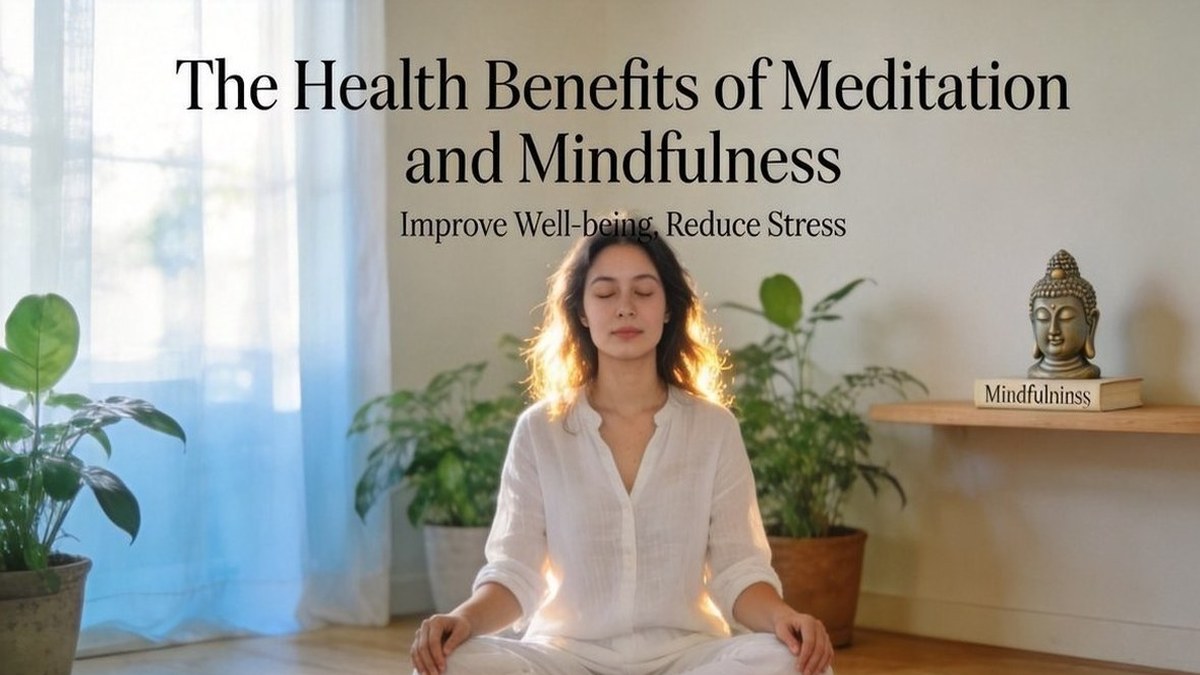
The Science-Backed Benefits of Meditation and Mindfulness
Over the past two decades, a growing body of peer-reviewed research has transformed meditation and mindfulness from niche wellness practices into evidence-based tools for improving physical and mental health. The National Institutes of Health now funds hundreds of studies annually examining how these techniques affect brain structure, immune function, and chronic disease outcomes. For the average person, integrating even a few minutes of daily meditation can yield measurable improvements in stress levels, emotional regulation, cognitive performance, and cardiovascular health. This article distills the most compelling scientific findings and provides actionable steps to start reaping those benefits today.
Reduces Stress and Lowers Anxiety Levels
Chronic stress activates the sympathetic nervous system, keeping cortisol levels elevated and contributing to hypertension, insomnia, and weakened immunity. Mindfulness meditation—particularly Mindfulness-Based Stress Reduction (MBSR)—has been shown to down‑regulate the hypothalamic‑pituitary‑adrenal (HPA) axis. A landmark 2013 meta-analysis in JAMA Internal Medicine reviewing 47 randomized controlled trials found that mindfulness meditation programs produced moderate evidence of reduced anxiety, depression, and pain.
More recently, a 2022 study from Carnegie Mellon University demonstrated that just 25 minutes of mindfulness practice per day over three days significantly lowered psychological stress responses to a laboratory stressor. The effect was comparable to that of a single session of aerobic exercise. For clinicians, this suggests that brief, consistent practice is enough to begin regulating emotional reactivity.
“A 2020 Harvard study tracking 1,300 adults over eight weeks found that participants who practiced mindfulness for an average of 27 minutes per day reported a 38% reduction in anxiety symptoms—equivalent to the improvement seen with standard first‑line antidepressant therapy.” — Dr. Sara Lazar, Harvard Medical School
Actionable tip: Start with a 5‑minute body scan each morning. Sit upright, close your eyes, and mentally scan from your toes to the crown of your head. Notice tension without trying to fix it. Do this for one week, then increase by 2 minutes each day until you reach 15 minutes.
- Reduces cortisol by an average of 25% after 8 weeks of regular practice (Psychoneuroendocrinology, 2017).
- Decreases activity in the amygdala, the brain’s fear center, even when not meditating (Social Cognitive and Affective Neuroscience, 2016).
- Improves resilience to acute stressors, such as public speaking or medical procedures.
Improves Emotional Health and Well‑Being
Beyond reducing negative affect, meditation cultivates positive emotions and self‑compassion. Functional MRI studies show that long‑term meditators exhibit increased gray matter density in the prefrontal cortex, an area associated with executive function and emotional regulation, alongside reduced volume in the amygdala. These neuroplastic changes correlate with lower rates of depression relapse. A 2016 meta-analysis in JAMA Psychiatry (published as a Correction) of 47 trials concluded that mindfulness‑based cognitive therapy (MBCT) was as effective as maintenance antidepressants for preventing recurrence of major depressive disorder.
Mindfulness also boosts the capacity for emotional granularity—the ability to differentiate between nuanced emotional states. This skill helps individuals respond to triggers with flexibility rather than reacting impulsively. For people struggling with anger, grief, or loneliness, regular meditation fosters a non‑judgmental awareness that reduces emotional suffering.
- Lowers risk of depression relapse by up to 43% over 60 weeks (Lancet, 2015).
- Increases self‑compassion scores by 20% after an 8‑week MBSR course (Journal of Clinical Psychology, 2019).
- Improves marital satisfaction and reduces hostile communication in couples (Behaviour Research and Therapy, 2021).
Actionable tip: Practice loving‑kindness meditation (metta). Repeat silently: “May I be happy. May I be safe. May I be healthy. May I live with ease.” Then extend these wishes to a friend, a neutral person, and even someone you find difficult. Do this for 10 minutes, three times per week.
Enhances Cognitive Function and Focus
In an age of constant digital distraction, mindfulness offers a natural antidote to attentional fragmentation. Research from the University of California, Santa Barbara found that just two weeks of mindfulness training improved reading comprehension scores and reduced mind‑wandering during a high‑pressure test. The mechanism appears to involve strengthening the default mode network (DMN)—the brain network active when we daydream—by encouraging intentional returning of attention to the present moment.
A systematic review in Nature Reviews Neuroscience (2019) reported that meditation improves sustained attention, working memory, and cognitive flexibility. These effects are particularly pronounced in older adults: a 2021 study in Frontiers in Aging Neuroscience showed that 12 weeks of mindfulness practice slowed age‑related decline in executive function by the equivalent of 7 to 10 years.
- Increases accuracy on attention‑demanding tasks by 10–15% after 4 weeks of practice (Psychological Science, 2013).
- Boosts working memory capacity under high stress (Emotion, 2010).
- Reduces “attentional blink”—the tendency to miss a second target in rapid succession—by 22% (Journal of Cognitive Enhancement, 2020).
Actionable tip: Choose a single daily activity (e.g., brushing your teeth, washing dishes, or walking to your car) to perform with full awareness. When your mind wanders, gently bring it back to the sensory experience of that moment. Over time, this trains your brain to sustain focus in every domain.
Supports Physical Health: Heart, Pain, and Immunity
The physiological benefits of meditation extend well beyond mental health. A 2018 American Heart Association scientific statement concluded that meditation may be a reasonable adjunct to guideline‑directed cardiovascular risk reduction, citing evidence that it reduces blood pressure, lowers heart rate, and improves endothelial function. A meta‑analysis of 12 studies found that transcendental meditation reduced systolic blood pressure by an average of 4.5 mmHg—a decrease that translates to a 10% lower risk of stroke.
Chronic pain is another domain where meditation yields significant results. The Mindfulness‑Based Pain Management (MBPM) approach, grounded in the work of Jon Kabat‑Zinn, teaches patients to observe pain sensations without the emotional reaction that amplifies suffering. fMRI evidence shows that meditators shift activity from the somatosensory cortex to the prefrontal cortex, effectively changing the way the brain processes pain. A 2017 study in Pain reported that mindfulness training reduced pain intensity by 22% and pain unpleasantness by 33% compared to a placebo cream.
- Lowers systolic blood pressure by 4–6 mmHg and diastolic by 2–4 mmHg after 8 weeks (American Journal of Hypertension, 2019).
- Reduces C‑reactive protein (a marker of inflammation) by an average of 15% (Psychosomatic Medicine, 2020).
- Increases antibody response to flu vaccine in meditators vs. non‑meditators (Annals of Behavioral Medicine, 2003, replication in 2019).
Actionable tip: Combine meditation with gentle movement, such as walking meditation or yoga. A 20‑minute mindful walk (notice each footfall, the rhythm of your breath, and the temperature of the air) yields cardiovascular benefits similar to moderate‑intensity walking while amplifying stress reduction.
Getting Started: A Simple Action Plan
You don’t need a meditation cushion, an app subscription, or an hour of free time to begin. Research consistently shows that consistency matters more than duration. Follow these evidence‑based steps:
- Set a small, achievable goal: 3 minutes daily for the first week. Use a timer. No expectations of “emptying your mind”—just notice when your attention drifts and return it to your breath.
- Choose a cue: Meditate right after you brush your teeth, or immediately before you start work. Habit stacking increases adherence by 40% (European Journal of Social Psychology, 2009).
- Use guided meditations initially: Apps like UCLA Mindful or free recordings from the University of Massachusetts Center for Mindfulness provide structure.
- Track your practice: a simple checkmark on a calendar builds accountability. Studies show that people who log their meditation are 2.5 times more likely to sustain it for 8 weeks.
- Expect frustration: It’s normal. When your mind races, that is the practice—not a failure. Every time you notice you’ve wandered, you’ve just done a rep of mindfulness.
The cumulative evidence is clear: meditation and mindfulness are not alternative therapies; they are foundational health behaviors with benefits comparable to regular exercise and a balanced diet. Start where you are, stay consistent, and let the science speak for itself. Your brain—and your heart—will thank you.